Why a Frame Stage Building Inspection Is Important for New Home Construction

Complete Frame Inspection Checklist Victoria for Builders and Homeowners
August 21, 2026
How Private Building Inspectors in Melbourne Can Help Protect Your Property Investment
September 10, 2026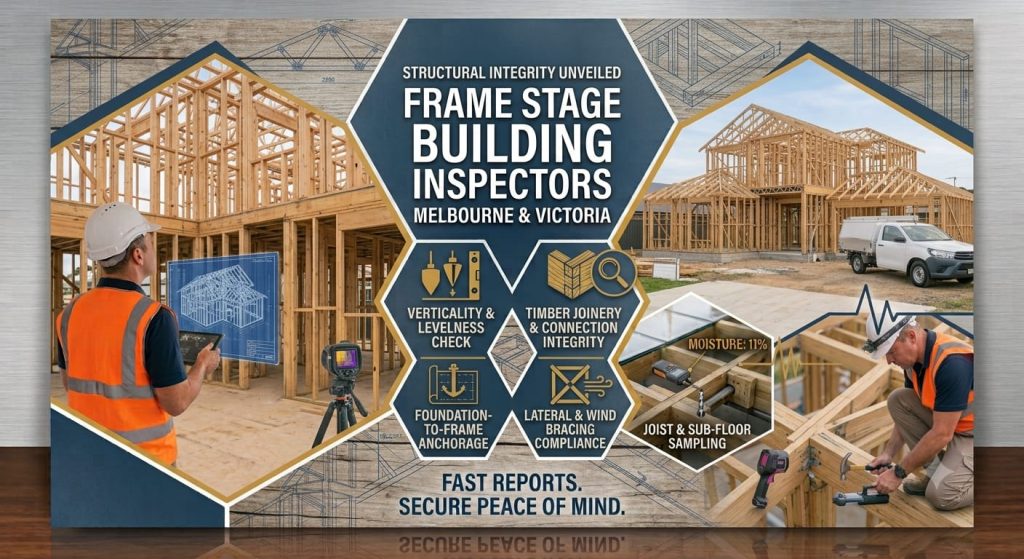
Building a new home is a major investment, and every stage of construction needs careful attention to detail. While a property may look perfect once construction is complete, defects that occur during the early stages can become difficult and expensive to correct later. A professional frame stage building inspection provides an opportunity to identify construction issues before walls, ceilings, and other materials cover the building frame.
At Point Building Inspections, we provide professional construction stage inspection services across Melbourne and Victoria, helping homeowners identify potential problems and make informed decisions throughout the building process.
What Is a Frame Stage Building Inspection?
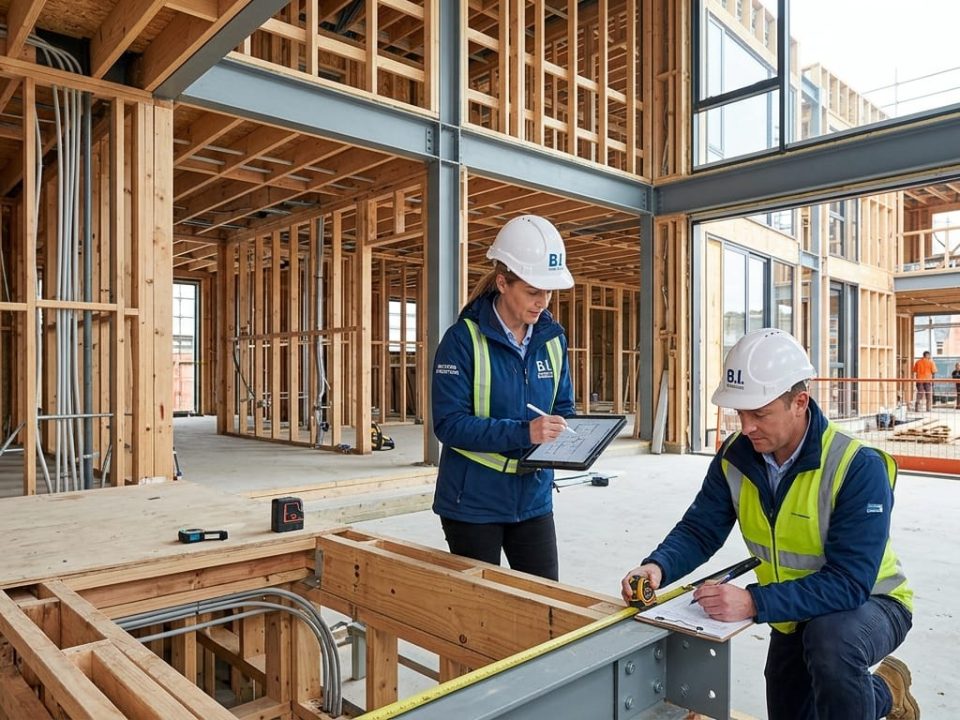
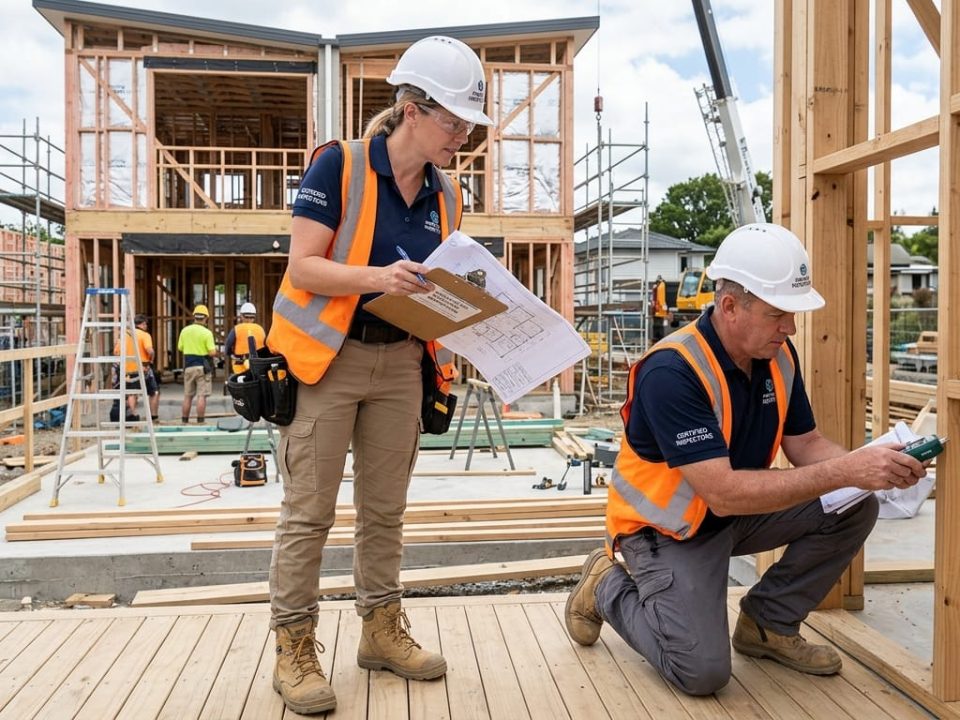
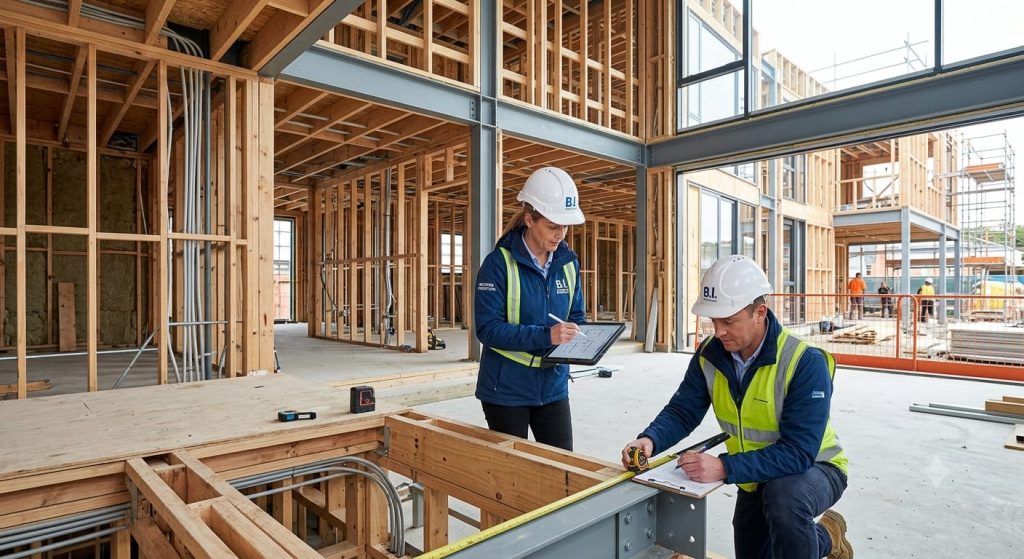
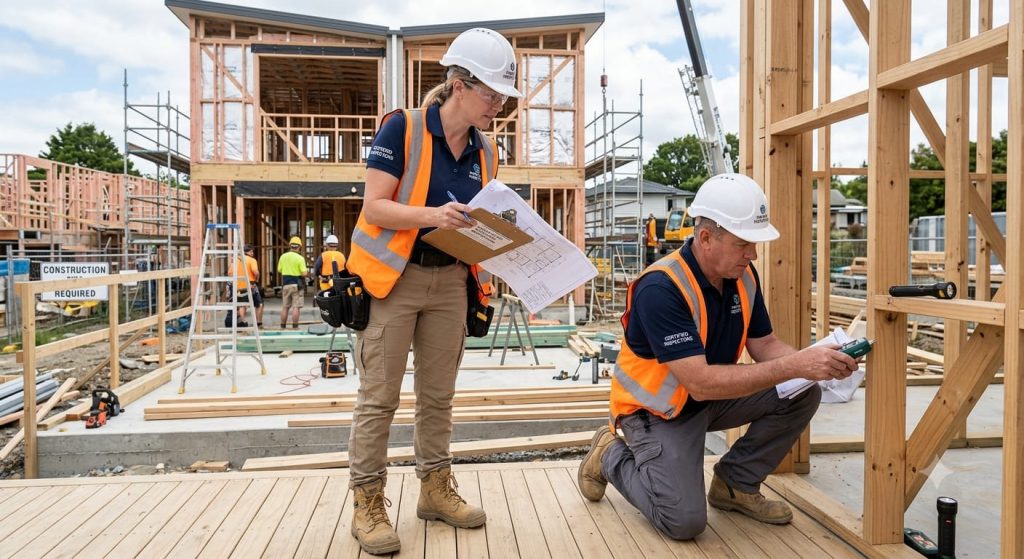
A frame stage inspection takes place after the structural frame of a new home has been constructed but before the internal walls are enclosed. This stage provides excellent access to important structural components that will become difficult to inspect once plasterboard, insulation, and other materials are installed.
The inspection can focus on the quality, positioning, and condition of accessible structural elements, helping identify potential issues before construction progresses.
Why Timing Matters
The frame stage is one of the most useful points during construction for identifying defects because many structural components are still visible.
An inspector may be able to examine:
- Wall frames
- Roof framing
- Structural connections
- Openings for windows and doors
- Floor framing
- Bracing
- Visible fixings
- Alignment and workmanship
Early identification gives the builder an opportunity to investigate and rectify concerns before the next construction stage.
What Does a Frame Stage Inspection Check?
A professional inspection generally focuses on accessible structural components and visible workmanship. The exact scope can vary depending on the building design and construction stage.
Structural Frame
The inspector can assess accessible framing for visible defects, damage, movement, poor workmanship, or other concerns requiring further attention.
Roof Structure
The roof framing is an important part of the home’s structural system. An inspection may consider accessible roof framing, connections, bracing, and other visible components.
Wall Frames and Openings
Wall frames need to be appropriately positioned and constructed. Openings for doors and windows can also be reviewed for visible construction concerns.
Bracing and Connections
Bracing and structural connections play an important role in maintaining the stability of a building. Accessible components can be visually assessed for apparent defects or installation concerns.
Frame Inspection Checklist Victoria
A frame inspection checklist Victoria can help homeowners understand the key areas that should be considered during a frame stage inspection.
Interior Areas
- Wall framing
- Internal openings
- Structural supports
- Floor framing where accessible
- Visible fixings and connections
- Alignment and workmanship
Exterior and Roof Areas
- External wall frames
- Roof framing
- Bracing
- Structural connections
- Window and door openings
- Visible damage or deterioration
Documentation
Homeowners should also keep relevant building plans, engineering documentation, variations, and construction records available. These documents can help provide context when assessing construction work.
Common Problems Found During Frame Stage
Frame inspections can identify a range of visible construction concerns. These may include incorrectly positioned framing members, damaged timber, poor connections, inadequate workmanship, or issues requiring further investigation.
Why Early Detection Is Valuable
A defect that is relatively straightforward to address during the frame stage may become more difficult to access after insulation, plasterboard, flooring, and other finishes are installed.
Identifying concerns early can therefore help reduce disruption and make the rectification process more manageable.
Why Hire a Professional Building Inspector?
Homeowners may not have the technical knowledge or experience required to recognise construction defects. A professional building inspector can provide an independent assessment of accessible areas and document observations in a clear report.
Independent Inspection
An independent inspection provides an additional perspective separate from the builder’s own quality-control processes.
Detailed Reporting
A professional report can document relevant findings with descriptions and photographs, helping homeowners communicate concerns with their builder.
Making Informed Decisions
The purpose of an inspection is not simply to identify problems. It is also to give homeowners useful information about the construction stage so they can discuss relevant issues with their builder.
When Should You Arrange a Frame Stage Inspection?
The inspection should generally be arranged when the frame has been completed and is accessible, but before it is enclosed by internal linings and other construction materials.
Coordinate With Your Builder
Homeowners should coordinate the inspection timing with their builder to ensure the property is ready and accessible for assessment.
Consider Other Construction Stage Inspections
A frame stage inspection is only one part of a broader construction quality-checking process. Depending on the project, homeowners may also consider inspections at other important stages, including pre-slab, lock-up, fixing, and handover stages.
Choose Point Building Inspections
Point Building Inspections provides professional building inspection services throughout Melbourne and Victoria. Our experienced team helps homeowners assess new construction at important stages and provides clear reports designed to make construction concerns easier to understand.
Our services include pre-purchase inspections, building and pest inspections, construction stage inspections, frame stage inspections, handover inspections, and defect inspections.
Build With Greater Confidence
A frame stage building inspection gives homeowners an important opportunity to identify visible construction concerns before they are hidden behind finished surfaces. By using a professional inspection and following a suitable frame inspection checklist Victoria, homeowners can better understand the condition of their new home’s structural frame and address concerns at an earlier stage.
For professional construction stage inspection services in Melbourne and Victoria, Point Building Inspections can help you take a closer look at your new home’s construction before the next stage begins.
Frequently Asked Questions
1. What is a frame stage building inspection?
A frame stage building inspection is an assessment carried out after the structural frame has been constructed and before walls and ceilings are enclosed. It focuses on accessible framing and visible construction workmanship.
2. Why is a frame inspection important?
It provides an opportunity to identify visible construction concerns while important structural components remain accessible, potentially making rectification easier before construction progresses.
3. What should be included in a frame inspection checklist Victoria?
A checklist may include wall framing, roof framing, structural connections, bracing, openings, fixings, alignment, visible damage, and other accessible structural components.
4. When should a frame stage inspection be completed?
It is generally performed once the frame has been completed but before internal linings and other materials conceal the framing.
5. Can a homeowner perform the inspection themselves?
Homeowners can visually review their construction, but a professional inspection is recommended when they need an independent assessment from someone with relevant building inspection experience.