
How Much Does a Building Inspection in Melbourne Cost in 2026?

Pre-Purchase Building Inspection in Melbourne Cost Breakdown (2026 Guide)
April 17, 2026
How Much Does a Pre-Purchase Building & Pest Inspection Cost in 2026?
April 21, 2026
Buying a property in Melbourne is one of the biggest financial decisions most Australians will ever make. Yet thousands of buyers skip one of the most critical steps — a professional building inspection. Whether you’re a first-home buyer navigating the inner suburbs or an investor eyeing a period home in the outer east, understanding the building and pest inspection cost in 2026 could save you tens of thousands of dollars down the track.
This guide breaks down exactly what you’ll pay, what drives those prices, and how to get the most value from your building inspection report in Australia.
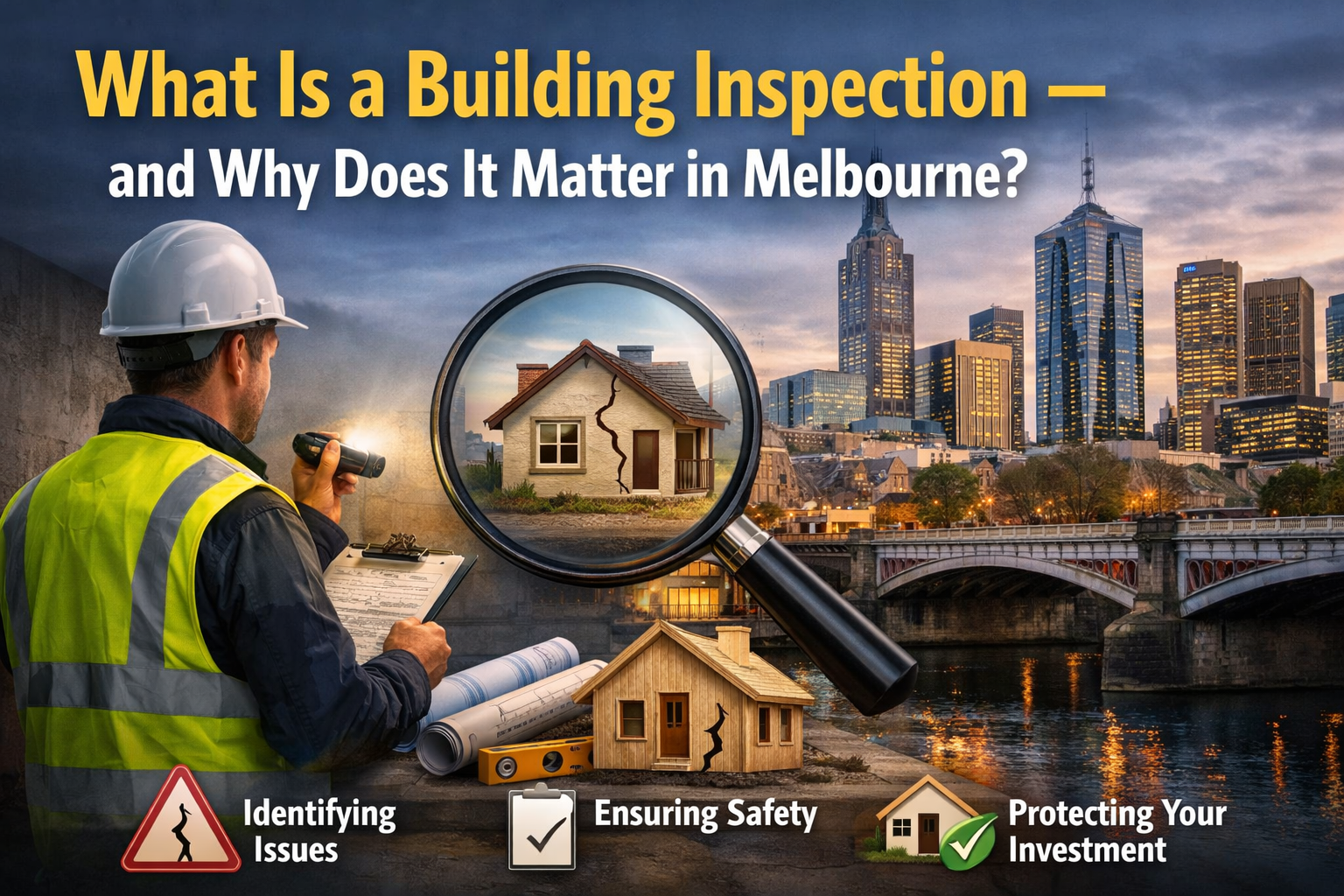
What Is a Building Inspection — and Why Does It Matter in Melbourne?
A building inspection is a professional visual assessment of a property’s condition, carried out by a licensed inspector before you buy, sell, or renovate. In Victoria, building inspectors are regulated by the Victorian Building Authority (VBA), which means every qualified inspector must hold relevant licences and carry professional indemnity insurance.
Melbourne’s property market is unique. The city is home to a dense mix of Federation-era homes, post-war weatherboards, 1970s brick veneer houses, and modern apartments — each with its own set of common defects. Rising damp in Victorian terraces, cracked brick veneer in older homes, and concrete cancer in mid-century apartments are all issues that can easily go undetected during a standard open-for-inspection.
A licensed inspector knows what to look for — and their findings can give you genuine negotiating power, or the clarity to walk away entirely.
Building Inspection Costs in Melbourne: 2026 Price Breakdown
Here is what you can realistically expect to pay for different inspection types in Melbourne this year:
| Inspection Type | Typical Price Range (incl. GST) |
| Building inspection only (apartment) | $280 – $420 |
| Building inspection only (house) | $400 – $600 |
| Building & pest inspection (combined) | $440 – $700 |
| Pre-sale building inspection | $370 – $550 |
| Structural engineer report | $1,500 – $2,200+ |
| Specialist asbestos or pool inspection | $200 – $500 (add-on) |
For a standard, average-sized Melbourne house, most buyers are paying in the $400–$550 range for a building-only inspection, or $440–$700 for a combined building and pest inspection. These prices reflect metropolitan Melbourne — outer regional areas of Victoria can sometimes be slightly cheaper, though travel surcharges may apply if the inspector needs to travel beyond their usual coverage zone.
What Factors Affect the Building and Pest Inspection Cost?
Not all inspections are priced the same way. Several key variables will influence what you ultimately pay:
Property Size and Complexity A two-bedroom apartment takes considerably less time to inspect than a four-bedroom house with a garage, decking, pool, and heritage outbuildings. Larger and more complex properties require more detailed reporting, which increases the fee.
Age of the Property Older Melbourne homes — particularly those built before the 1970s — often require more thorough investigation. Inspectors must assess potentially hazardous materials like asbestos, assess period-specific construction methods, and evaluate decades of maintenance (or neglect). Pre-war homes in suburbs like Fitzroy, Richmond, and Hawthorn commonly attract higher inspection fees as a result.
Type of Dwelling A standalone house, a townhouse with shared walls, and an apartment in a strata complex all involve different scopes of inspection. Strata apartments may also require a separate owners corporation report, which is an additional cost not typically included in the building inspection fee.
Urgency and Turnaround Time Standard turnaround is one to three business days. If you need your building inspection report in Australia processed within 24 hours — for example, ahead of auction day — expect a priority or express fee of $50 to $150 on top of the standard rate. In Melbourne’s competitive market, this fast-turnaround option is frequently used.
Inspector Qualifications and Specialisation A generalist inspector will typically charge less than a specialist with extensive experience in heritage properties, structural assessments, or pest biology. While independent, highly qualified building inspectors in Melbourne may charge a premium, their more detailed reports can reveal issues that cheaper alternatives miss entirely.
Is a Combined Building and Pest Inspection Worth It?
Absolutely — and in Melbourne, it’s often the smarter financial decision.
A combined building and pest inspection bundles two critical assessments into one site visit. The building component covers structural integrity, moisture, roofing, drainage, and electrical safety concerns. The pest component — carried out to Australian Standard AS 4349.3 — assesses for live termite activity, past termite damage, wood borers, and timber decay.
Melbourne is not in a high-termite-risk zone compared to Queensland or coastal New South Wales, but termite activity does occur — particularly in older suburbs with established trees and timber-framed homes. Catching a termite issue before purchase is far less costly than discovering it after settlement.
Booking both as a package generally saves you $80–$150 compared to arranging them separately.
What Does a Building Inspection Report in Australia Include?
Under Australian Standard AS 4349.1, a compliant building inspection report must cover all accessible areas of the property. A high-quality report from reputable building inspections in Melbourne should include:
- A clear summary of major and minor defects
- Photographs of each identified defect, with geotags and timestamps
- A severity rating for each issue (major, minor, or maintenance item)
- Recommendations for further specialist assessment where required
- Commentary on safety hazards
The report should be delivered digitally, typically within 24 hours of the inspection. Be wary of generic, template-heavy reports that lack photographs or site-specific observations — these offer little real protection.
Can You Negotiate on Price After an Inspection?
Yes — and this is one of the most overlooked advantages of a thorough inspection. If your building inspection report identifies significant defects — a deteriorating roof, rising damp, structural movement, or evidence of past pest activity — you have documented grounds to renegotiate the purchase price, request repairs before settlement, or exercise a cooling-off option.
In Melbourne, where the median house price remains firmly in the high six figures, even a 1–2% price reduction can easily cover the cost of the inspection several times over. The inspection cost is not just a service fee — it is a strategic investment in your negotiating position.
How to Choose the Right Building Inspectors in Melbourne
When selecting an inspector, look for:
- VBA registration – Inspectors in Victoria must be registered with the Victorian Building Authority
- Professional indemnity and public liability insurance – This protects you if the inspection misses something that later becomes a costly defect claim
- Membership of a professional body – Such as the Master Builders Association Victoria or Australian Institute of Building Surveyors
- Independent inspectors – Avoid inspectors referred directly by the real estate agent; always choose someone you engage independently
Ask to see a sample report before booking. A well-structured, photo-rich sample report is a reliable indicator of what you’ll receive for your property.
The Bottom Line: Is a Building Inspection Worth the Cost?
In 2026, the cost of a building inspection in Melbourne ranges from around $400 for a basic inspection to $700+ for a comprehensive combined building and pest report. That represents a fraction of one percent of a typical Melbourne property purchase price.
Skipping an inspection to save a few hundred dollars is a false economy. Hidden defects in Melbourne properties — structural cracking, failing waterproofing, termite damage, inadequate drainage — can run into repair bills of $20,000, $50,000, or more.
A thorough building inspection report gives you the facts. What you do with those facts — whether you negotiate, proceed with confidence, or walk away — is entirely your decision. But it should always be an informed one.


